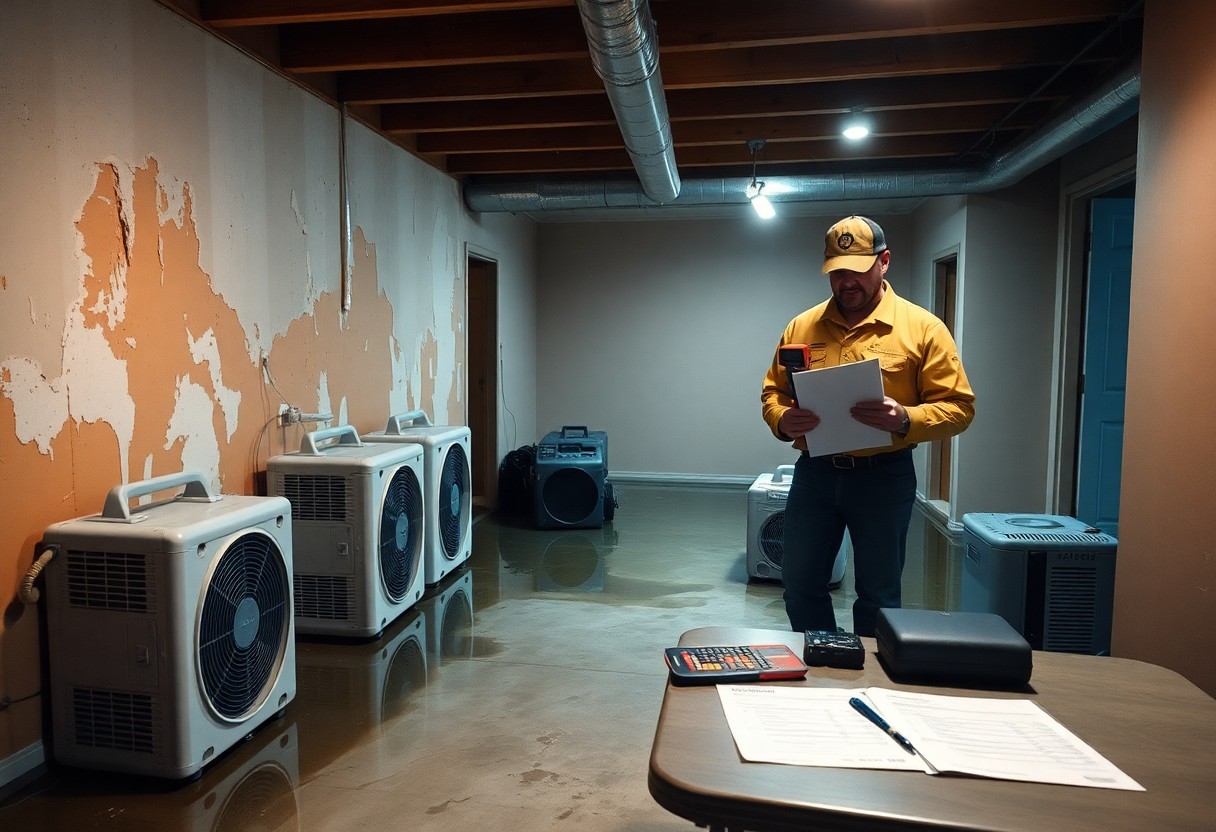
How Much Does Water Damage Restoration Cost in Charlotte? (2026 Guide)
By DamagePros Direct•
Quick answer
In Charlotte, water damage restoration typically costs $1,500 to $3,500 for a small clean-water (Category 1) single-room dry-out, $8,000 to $25,000 for a finished basement or Category 2 job with structural repairs, and $25,000 or more for Category 3 (black water) or large losses. Most insured claims leave you paying only your deductible, because the pro we match you with bills the carrier directly.
Key takeaways
Cost is driven mostly by water category (clean / gray / black), square footage affected, and how many drying days the structure needs.
Typical Charlotte ranges: $1,500–$3,500 (Cat 1 single room), $8,000–$25,000 (Cat 2 / finished basement), $25,000+ (Cat 3 / large loss).
Most sudden-event water damage is covered by homeowners insurance; you usually pay only your deductible while the crew we match you with bills the carrier directly.
Acting within the first 24–48 hours is the single biggest way to keep the bill down, because it prevents mold and secondary structural damage.
When water floods a Charlotte home, the first question is almost always the same: what is this going to cost? The honest answer is that it depends on a few specific factors, but the ranges below reflect what Charlotte homeowners actually pay, and what changes the number.
What water damage restoration costs in Charlotte
Restoration is priced by the scope of the loss, not a flat rate. These are the typical ranges the local crews we match you with see across the Charlotte metro:
Scenario
Typical cost
Small Category 1 (clean water), single room dry-out
$1,500 – $3,500
Category 2 (gray water) or finished-basement job with repairs
$8,000 – $25,000
Category 3 (black water / sewage) or large multi-room loss
$25,000+
These are estimates, not quotes. The only way to get an exact number is an on-site inspection, which is free.
What drives the price
Five factors move the number more than anything else:
Water category. Clean water (Cat 1) is the cheapest to remediate. Gray water (Cat 2) adds antimicrobial treatment. Black water (Cat 3), including sewage and creek flooding, requires containment, full PPE, and disposal, which is the most expensive.
Square footage affected. More wet material means more extraction, more drying equipment, and more to rebuild.
Drying time. Structural drying runs three to five days on average, with industrial air movers and dehumidifiers metered daily. Longer drying means higher equipment cost.
Structural and contents damage. Drywall, baseboards, flooring, cabinets, and soaked belongings that cannot be saved add removal and rebuild cost.
Hidden migration. Water that traveled inside walls or under flooring expands the affected area, which is why professional moisture mapping matters.
How insurance changes the bill
Most sudden, accidental water damage is covered by North Carolina homeowners policies. When a claim is covered, the local pro we match you with documents the loss for your adjuster and bills the carrier directly, so your out-of-pocket is usually just your deductible.
What is commonly not covered: chronic seepage, slow long-term leaks, and surface flooding from creeks or storms (that needs a separate flood policy). The pro we match you with tells you which bucket your loss falls into before any work begins, so there are no surprises.
How to keep the cost down
The single biggest cost driver is time. Mold can begin within 24 to 48 hours in Charlotte’s humidity, and secondary structural damage compounds every hour water sits. To protect your home and your wallet:
Shut off the water at its source if it is safe to do so.
Photograph and video everything before cleanup.
Open your insurance claim right away.
Call an IICRC-certified crew within the first 24 hours.
For the full emergency response process, see our Charlotte water damage restoration page, or if you are dealing with damage right now, get help now and we’ll match you with a local pro immediately.
Damage in Charlotte right now?
Our IICRC-certified crews are on call 24/7. Free assessment, insurance handled.
Does homeowners insurance cover water damage restoration in Charlotte?+
Most North Carolina homeowners policies cover sudden, accidental water damage such as a burst pipe, a failed appliance, or a storm-driven roof leak. Chronic seepage and slow leaks are usually excluded, and surface flooding (creek overruns, storm runoff) needs a separate NFIP or private flood policy. When a claim is covered, the pro we match you with bills the carrier directly and you typically pay only your deductible.
How much does it cost to dry out a flooded basement in Charlotte?+
A finished basement dry-out with extraction, three to five days of structural drying, and some drywall and flooring replacement commonly runs $8,000 to $25,000 in the Charlotte area. Unfinished basements with only clean water and minimal materials to replace cost less; sewage backups (Category 3) cost more because of containment and disposal.
Why is water damage restoration so expensive?+
The price reflects emergency response, industrial extraction and drying equipment running for days, antimicrobial treatment, and the labor to remove and rebuild materials that cannot be saved. Larger affected areas, higher water categories, and structural or contents damage all push the cost up.
Can I reduce the cost of water damage restoration?+
Yes. Shut off the water source, document everything with photos, and call a restoration crew within the first 24 hours. Fast extraction and drying prevents mold and secondary damage, which is where costs balloon. Opening your insurance claim promptly and letting the crew bill the carrier directly also keeps your out-of-pocket to the deductible.