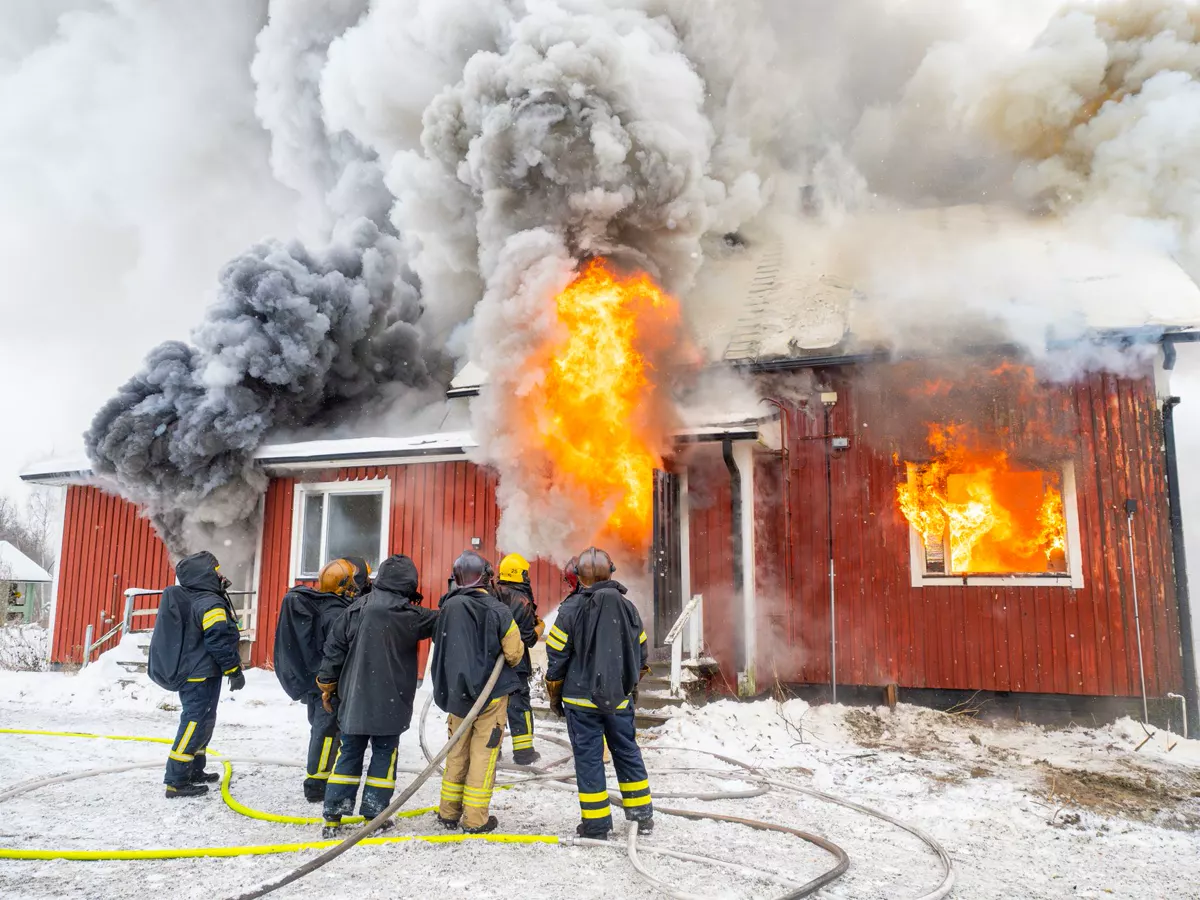
The first 48 hours after a house fire: a step-by-step guide
By DamagePros Direct•
Quick answer
In the first 48 hours after a house fire, your priorities in order are: make sure everyone is safe and do not re-enter until the fire department clears the structure, contact your insurance company to open a claim, secure the home with board-up and tarping to prevent further loss, and call an IICRC-certified restoration crew to start cleanup before soot sets and suppression water breeds mold. Do not wipe soot or move through the house cleaning, because that smears residue and can turn salvageable items into total losses.
Key takeaways
Do not re-enter the home until the fire department declares it structurally safe, even if the fire looks out.
Open your insurance claim immediately; fast claims move faster and ALE coverage can pay for a hotel the same day.
Secure the home fast with board-up and tarping; an open structure invites weather, theft, and a denied claim for 'failure to mitigate.'
Never wipe or touch soot-covered surfaces, because rubbing smears acidic residue deeper and can ruin items that could have been cleaned.
Fast professional response saves contents: soot becomes permanent and suppression water breeds mold within 24–48 hours in Charlotte's humidity.
The first two days after a house fire are the most important for your safety, your insurance claim, and how much of your home you can save. Here is exactly what to do, in the order to do it.
Step 1: Make sure everyone is safe
Account for every person and pet, and get medical attention for anyone exposed to smoke or burns. Do not re-enter the home until the fire department officially clears it. Even when the flames are out, a fire leaves behind:
Weakened framing and floors that can collapse.
Hidden hot spots that can reignite.
Compromised or live electrical systems.
Toxic smoke and soot still in the air.
If you need somewhere to stay, your insurance policy’s Additional Living Expenses (ALE) coverage can often pay for a hotel the same day.
Step 2: Contact your insurance company
Open your claim as soon as you and your family are safe, ideally the same day. Calling early does three things:
Starts your ALE coverage so housing and essentials are paid for right away.
Gets an adjuster assigned so the rebuild scope can move forward.
Lets your insurer and a restoration crew coordinate before secondary damage sets in.
Before any cleanup, photograph and video everything: every room, every damaged item, and the exterior. This documentation protects the value of your claim.
Step 3: Secure the home
An open, fire-damaged home is exposed to weather, theft, and animals, and an unsecured structure can lead to additional losses your insurer may push back on under “failure to mitigate.” Securing the home means:
Board-up of broken windows, doors, and openings.
Tarping of roof holes and damaged sections.
The crew we match you with handles emergency board-up and tarping as part of first response, often on site within about an hour of dispatch, so the structure is protected while the claim gets underway.
Step 4: Retrieve only the essentials
Once the home is cleared as safe, do a brief, careful trip for must-have items:
Identification, passports, and key financial and insurance documents.
Prescription medications.
Phones, chargers, and laptops (powered off until inspected).
Irreplaceable items like photos, if they are easy to reach.
Keep it short. The home is not yet a safe place to spend time, and disturbing soot or contents can do more harm than good.
Step 5: Know what NOT to touch
This is where well-meaning homeowners accidentally cost themselves thousands. Do not wipe, dust, or scrub anything covered in soot. Soot is acidic and greasy, and rubbing it:
Smears and grinds residue deeper into walls, ceilings, and fabrics.
Permanently stains or etches surfaces that a professional could have cleaned.
Turns a salvageable item into a total loss.
Also leave the HVAC system and electronics off until they are inspected, because running them spreads soot through the entire home.
Why fast response saves your home and your belongings
Damage does not stop when the fire is out. It keeps getting worse:
Soot sets. Within days, acidic residue etches glass, metal, and finishes permanently.
Odor deepens. Smoke works further into porous materials the longer it sits.
Mold takes hold. The water used to put the fire out breeds mold within 24 to 48 hours in Charlotte’s 70%-plus humidity.
Getting an IICRC-certified crew on site fast is the single biggest factor in how much can be saved. For the full emergency process and what the crew we match you with does on arrival, see our Charlotte fire & smoke damage restoration page. If you are in the first hours after a fire right now, get help now and we will connect you with a local crew right away, 24/7.
Damage in Charlotte right now?
Our IICRC-certified crews are on call 24/7. Free assessment, insurance handled.
Not until the fire department officially clears the structure as safe to enter. Even when flames are out, fires leave hidden hazards: weakened framing, compromised floors, live electrical, lingering hot spots, and toxic smoke residue in the air. Wait for the all-clear, then enter only briefly and with caution to retrieve essentials.
When should I call my insurance company after a fire?+
As soon as you and your family are safe, ideally the same day. Opening the claim early starts the clock on your Additional Living Expenses coverage, which can pay for a hotel, meals, and essentials right away, and it lets your adjuster and a restoration crew coordinate before secondary damage sets in. Take photos and video before any cleanup begins.
What does 'securing the home' after a fire mean?+
It means boarding up broken windows and doors and tarping any holes in the roof so the structure is protected from weather, animals, and intruders. Insurers expect you to take reasonable steps to prevent further damage, and an unsecured home can lead to additional losses that complicate your claim. The crew we match you with handles emergency board-up and tarping as part of the first response.
What should I not touch after a fire?+
Do not wipe, dust, or scrub soot-covered walls, ceilings, or belongings. Soot is acidic and greasy, and rubbing it pushes residue deeper into surfaces and can permanently stain or etch items that a professional could have cleaned. Also avoid using electronics or HVAC systems until they have been inspected, because that can spread soot through the whole house.
Why does fast response matter so much after a fire?+
Because damage keeps compounding after the flames are out. Soot residue becomes harder to remove and can permanently etch surfaces within days, odors set deeper into porous materials, and the water used to extinguish the fire breeds mold within 24 to 48 hours in Charlotte's humidity. Getting an IICRC-certified crew on site fast is the single biggest factor in how much of your home and belongings can be saved.