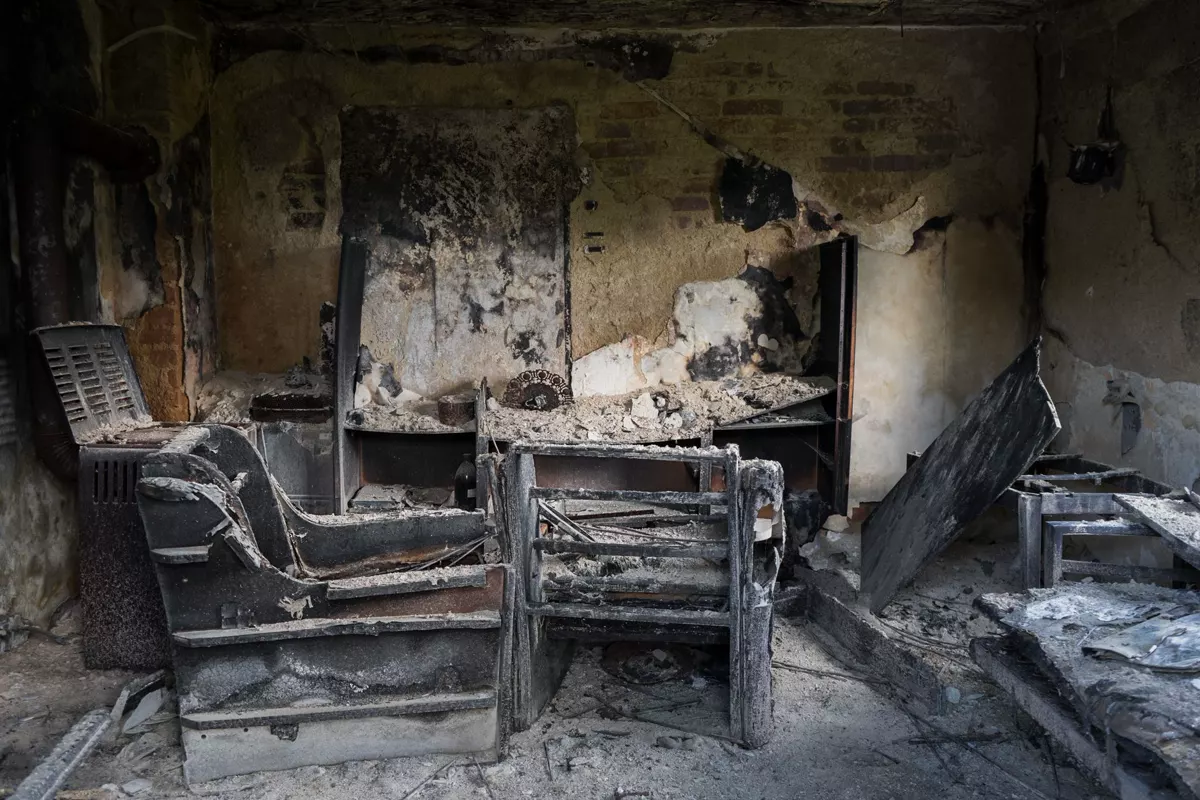
Can you stay in your home during fire restoration?
By DamagePros Direct•
Quick answer
In most cases you cannot safely stay in your home during the first phase of fire restoration. Lingering smoke and soot, airborne particles, demolition dust, the pack-out of belongings, and a structure that may not be secure all make it unsafe and impractical. Your homeowners policy's Additional Living Expenses (ALE) coverage typically pays for temporary housing during this time. You can usually return once the cleanup and deodorization are complete and the home is structurally safe, which may be sooner in partial-home losses where only one area is affected.
Key takeaways
Most homeowners cannot stay during phase one of fire restoration due to smoke odor, airborne soot, demolition dust, pack-out, and security concerns.
Additional Living Expenses (ALE) coverage typically pays for a hotel or rental, meals, and storage while you are displaced.
Soot and smoke residue are respiratory hazards, and running the HVAC during cleanup would re-spread contamination through the home.
Return timelines range from a couple of weeks for small fires to several months for whole-house reconstruction.
In partial-home losses where one area is affected and can be sealed off, staying home is sometimes possible after a safety assessment.
After a fire, families want to get back to normal as fast as possible, and that often means asking whether they can stay home while the work gets done. In most cases, the answer for the first phase is no. Here is why, how your insurance covers it, and when you can return.
Why you usually can’t stay during phase one
Even after the fire department clears the structure, an actively-restored home is not a safe or livable place. The first phase involves several conditions that make staying impractical and unhealthy:
Smoke and soot residue linger on surfaces and in the air, and these are respiratory and skin hazards.
The HVAC system is contaminated, so it cannot be run normally without spreading soot through the home, which makes climate control a problem.
Pack-out is underway, with crews inventorying and removing belongings for off-site cleaning.
Demolition dust fills the air as charred and saturated materials are removed.
Security and stability may still be compromised in fire-damaged areas.
For all these reasons, most homeowners move out for the first phase of restoration.
How ALE pays for somewhere to stay
You do not have to absorb the cost of being displaced. Your homeowners policy’s Additional Living Expenses (ALE) coverage, sometimes called Loss of Use, is built for exactly this situation. It typically pays for:
A hotel or temporary rental.
Meals above your normal grocery spending.
Pet boarding.
Storage for belongings during the rebuild.
Open your claim early so ALE starts covering you right away, and keep every receipt. Because the crew we match you with bills the carrier directly for the restoration work, your focus can stay on your family rather than fronting costs.
The timeline to return
How soon you can move back depends entirely on the scope of the fire:
Scope of loss
Typical time to return
Small contained fire with smoke cleanup and minor repairs
Around a couple of weeks
Significant fire with partial reconstruction
Several weeks to a few months
Whole-house loss with full reconstruction
Several months
Timelines hinge on demolition, how long structural drying takes (remember, suppression water has to be dried out first), deodorization, and how quickly insurance approves the rebuild scope. The pro we match you with gives you a realistic schedule after the on-site inspection so you can plan.
When staying home is possible: partial-home losses
Not every fire forces a full move-out. In a partial-home loss, where the damage is contained to one area, staying in an unaffected part of the home is sometimes possible. Whether that works depends on:
How far the smoke and soot actually spread.
Whether the HVAC system was contaminated.
Whether crews can seal off and isolate the work zone from your living space.
This is a judgment call that requires a professional safety assessment, not a guess. The crew we match you with can evaluate your specific situation and tell you honestly whether staying in part of the home is safe.
For the full fire and smoke recovery process and what to expect at each phase, see our Charlotte fire & smoke damage restoration page. If you need to know whether your home is safe to stay in right now, get help now and we will connect you with a local pro who will assess it and lay out your timeline.
Damage in Charlotte right now?
Our IICRC-certified crews are on call 24/7. Free assessment, insurance handled.
Usually not during active restoration. Even after the flames are out, the home can have airborne soot and smoke particles that are respiratory hazards, demolition dust, strong odors, and a structure that may not be fully secure or stable. Most homeowners move out during the first phase and return once cleanup, deodorization, and any structural repairs are complete. A professional safety assessment is the right way to know for sure.
Will insurance pay for a hotel during fire restoration?+
Yes, in most cases. Your homeowners policy's Additional Living Expenses (ALE) coverage, sometimes called Loss of Use, is designed to pay for temporary housing, meals above your normal costs, and storage while your home is uninhabitable after a covered fire. Open your claim early so ALE can start covering you right away, and keep all your receipts.
How long until I can move back home after a fire?+
It depends on the scope. A small contained fire with smoke cleanup and minor repairs can let you return in a couple of weeks, while a whole-house loss with full reconstruction can take several months. Timelines hinge on demolition, how long structural drying takes, deodorization, and how quickly insurance approves the rebuild. The pro we match you with gives you a realistic schedule after the on-site inspection.
Can I stay in part of my house if only one room burned?+
Sometimes. In a partial-home loss where the damage is contained to one area and crews can seal it off from the living space, staying in an unaffected part of the home is occasionally possible. It depends on whether the smoke and soot spread, whether the HVAC was contaminated, and whether the work zone can be isolated safely. This requires a professional assessment, not a guess.
Why can't I stay during the pack-out?+
A pack-out is when crews inventory, remove, and off-site clean your belongings so they can be restored and so the home can be worked on. During this phase the home is an active work site with contents being moved out, soot being cleaned, and dust from demolition, which is neither safe nor livable. Staying elsewhere lets the crew work efficiently and protects your health, and ALE coverage is there to pay for it.